
Bone, joint, muscle, and ligament problems can affect people of all ages. From occasional knee pain and backache to arthritis, fractures, and sports injuries, orthopedic conditions can interfere with mobility and everyday activities. Recognising the symptoms early can help patients seek appropriate medical attention and prevent a minor problem from becoming more serious.
Jeevan Asha Hospital & Rehabilitation Centre is committed to making quality orthopedic treatment and rehabilitation accessible and affordable for patients. With a patient-centred approach, the hospital focuses on providing comprehensive care for bone, joint, muscle, and mobility-related conditions.
If you are experiencing persistent pain, stiffness, swelling, or difficulty moving, consulting an experienced orthopedic specialist can help identify the underlying cause and determine the right treatment.
What Are Orthopedic Problems?
Orthopedic problems involve the musculoskeletal system, which includes bones, joints, muscles, ligaments, tendons, cartilage, and the spine. These conditions may develop because of ageing, injuries, repetitive movements, lifestyle factors, sports activities, or underlying medical conditions.
Some orthopedic problems can improve with rest, medicines, physiotherapy, and lifestyle changes, while others may require procedures or surgery.
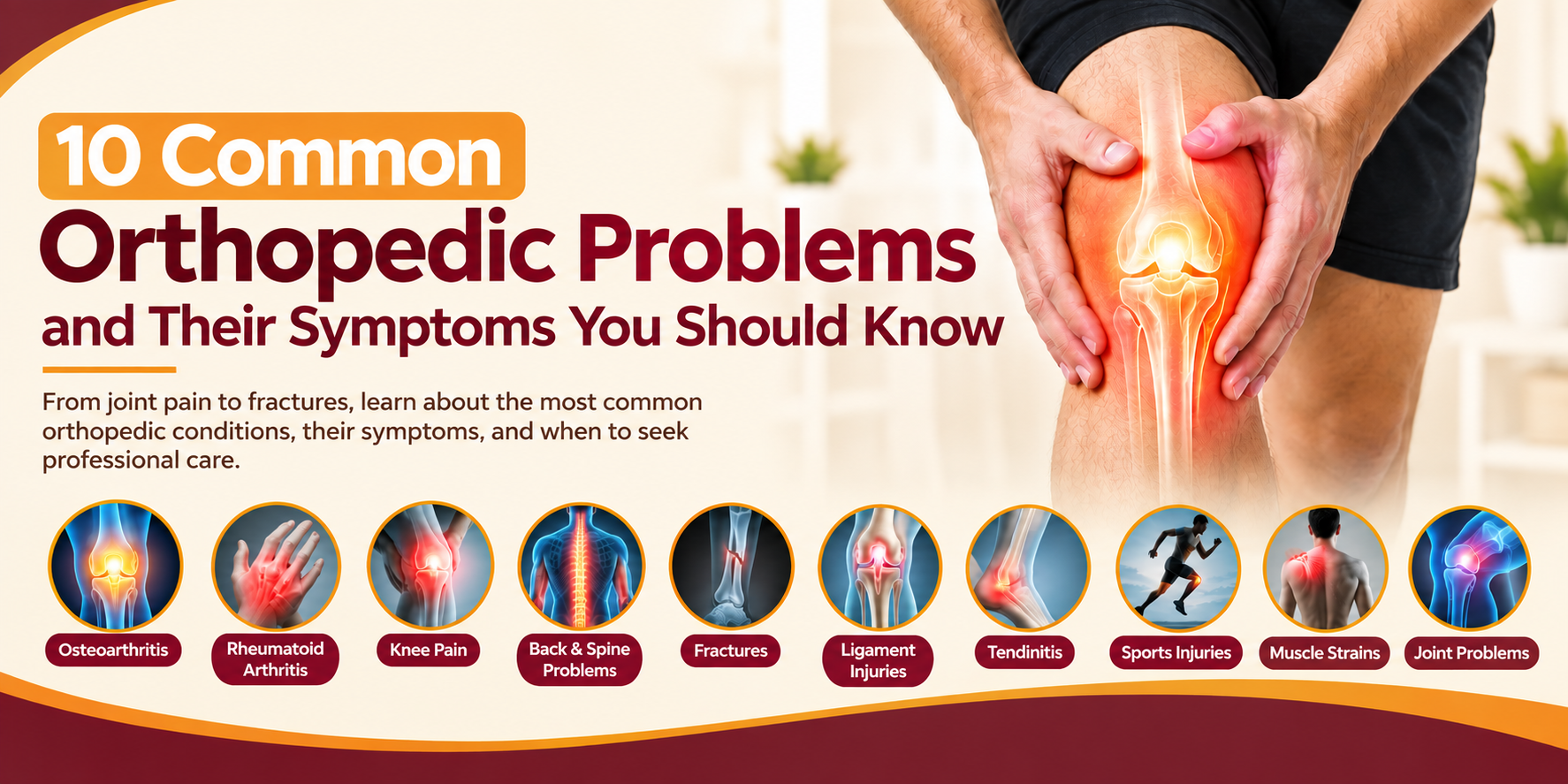
10 Common Orthopedic Problems and Their Symptoms
1. Osteoarthritis
Osteoarthritis is one of the most common joint conditions, particularly among older adults. It occurs when the protective cartilage within a joint gradually wears down.
Common symptoms include:
- Joint pain during movement
- Stiffness, particularly after rest
- Swelling around the joint
- Reduced range of motion
- Clicking or grinding sensations
The knees, hips, hands, and spine are commonly affected.
2. Rheumatoid Arthritis
Rheumatoid arthritis is an autoimmune condition that can cause inflammation in the joints. Unlike typical wear-and-tear arthritis, it may affect several joints and can progress without appropriate management.
Symptoms may include:
- Pain and swelling in multiple joints
- Morning stiffness
- Warmth around affected joints
- Fatigue
- Difficulty performing everyday activities
Early evaluation can help manage symptoms and protect joint function.
3. Knee Pain
Knee pain can result from arthritis, injuries, ligament problems, cartilage damage, overuse, or other orthopedic conditions.
Warning signs include:
- Persistent knee pain
- Swelling
- Difficulty climbing stairs
- Pain while walking or standing
- Knee stiffness
- Feeling of instability
Persistent or worsening knee pain should not be ignored, particularly when it affects mobility.
4. Back and Spine Problems
Back pain is extremely common and can result from muscle strain, poor posture, disc-related problems, spinal degeneration, or injuries.
Common symptoms include:
- Lower back pain
- Stiffness
- Pain spreading to the legs
- Tingling or numbness
- Difficulty bending or moving
- Muscle weakness in some cases
Severe pain, progressive weakness, or loss of bladder or bowel control requires urgent medical attention.
5. Fractures
A fracture occurs when a bone partially or completely breaks. Falls, road accidents, sports injuries, and weakened bones can increase the risk.
Possible symptoms include:
- Sudden and severe pain
- Swelling
- Bruising
- Difficulty moving the affected area
- Deformity
- Inability to put weight on the injured limb
Suspected fractures require prompt medical assessment and appropriate imaging.
6. Ligament Injuries
Ligaments connect bones and provide stability to joints. Sports activities, sudden twisting movements, and accidents can cause ligament injuries.
The knee and ankle are particularly vulnerable.
Symptoms may include:
- Sudden pain after an injury
- Swelling
- Bruising
- Joint instability
- Difficulty walking or putting weight on the affected limb
Depending on the severity, treatment may include rest, bracing, physiotherapy, or surgery.
7. Tendinitis
Tendinitis occurs when a tendon becomes irritated or inflamed, often because of repetitive movement or overuse.
It commonly affects areas such as the shoulder, elbow, wrist, knee, and heel.
Symptoms include:
- Pain during movement
- Tenderness
- Mild swelling
- Stiffness
- Reduced strength or mobility
Rest, activity modification, physiotherapy, and other treatments may help depending on the underlying cause.
8. Frozen Shoulder
Frozen shoulder, also known as adhesive capsulitis, causes pain and progressive stiffness in the shoulder joint.
Typical symptoms include:
- Shoulder pain
- Difficulty raising the arm
- Reduced shoulder movement
- Pain while sleeping
- Difficulty performing activities such as dressing or reaching overhead
Physiotherapy is often an important part of recovery.
9. Sports Injuries
Athletes and physically active individuals may experience injuries involving muscles, bones, ligaments, tendons, and joints.
Common sports injuries include:
- Sprains
- Muscle strains
- Ligament tears
- Dislocations
- Fractures
- Tendon injuries
Proper diagnosis and rehabilitation can help patients return to their normal activities safely.
10. Osteoporosis and Fragility Fractures
Osteoporosis causes bones to become weaker and more susceptible to fractures. It can develop gradually without obvious symptoms until a fracture occurs.
Possible warning signs include:
- Frequent fractures
- Back pain
- Loss of height
- Stooped posture
- Fractures after minor falls or injuries
People at higher risk may benefit from bone health evaluation and appropriate preventive measures.
When Should You See an Orthopedic Specialist?
Not every ache requires immediate medical attention. However, you should consider consulting an orthopedic specialist if you experience:
- Persistent or worsening bone or joint pain
- Repeated swelling
- Difficulty walking or moving a joint
- Limited range of motion
- Pain that interferes with sleep or daily activities
- Recurrent sports injuries
- Numbness or weakness
- A suspected fracture or dislocation
- Pain that does not improve with rest
Early evaluation can help determine whether you need medication, physiotherapy, lifestyle changes, injections, or surgical treatment.
How Are Orthopedic Problems Diagnosed?
An orthopedic specialist generally begins with a detailed medical history and physical examination. Depending on the symptoms, additional investigations may be recommended.
These can include:
- X-rays
- MRI scans
- CT scans
- Ultrasound
- Blood tests for certain inflammatory conditions
- Bone density testing
The treatment plan depends on the diagnosis, severity of the condition, age, activity level, and overall health of the patient.
Treatment Options for Orthopedic Conditions
Orthopedic treatment is not always surgical. Depending on the condition, doctors may recommend:
Non-Surgical Treatment
- Medicines for pain and inflammation
- Physiotherapy
- Exercise and stretching
- Weight management
- Activity modification
- Braces or supports
- Injections when appropriate
Surgical Treatment
Some severe injuries and advanced orthopedic conditions may require surgery. Procedures can include fracture fixation, ligament repair, arthroscopy, or joint replacement.
The goal is to reduce pain, improve mobility, restore function, and help patients return to their daily activities.
Why Choose the Right Orthopedic Hospital?
Choosing an appropriate healthcare facility is important when dealing with persistent bone and joint problems. A comprehensive orthopedic centre should provide access to experienced specialists, diagnostic facilities, physiotherapy, rehabilitation, and appropriate surgical care when required.
Patients looking for the Best Orthopedic Hospital in Ghaziabad should consider factors such as the hospital’s orthopedic expertise, diagnostic facilities, treatment options, rehabilitation services, patient care, and overall treatment approach.
Frequently Asked Questions
1. What are the most common orthopedic problems?
Some common orthopedic problems include osteoarthritis, knee pain, back pain, fractures, ligament injuries, tendinitis, frozen shoulder, sports injuries, rheumatoid arthritis, and osteoporosis.
2. When should I see an orthopedic doctor?
You should consider seeing an orthopedic doctor when pain persists, mobility becomes difficult, swelling continues, an injury occurs, or symptoms interfere with your daily activities.
3. Can orthopedic problems be treated without surgery?
Yes. Many orthopedic conditions can be managed with medicines, physiotherapy, exercises, lifestyle modifications, braces, and other non-surgical treatments. Surgery is considered when conservative treatment is insufficient or when the condition requires surgical intervention.
4. How can I choose an orthopedic hospital in Ghaziabad?
Look for a hospital offering experienced orthopedic specialists, appropriate diagnostic facilities, comprehensive treatment options, physiotherapy and rehabilitation services, and patient-focused care.
5. Is physiotherapy useful for orthopedic problems?
Physiotherapy can play an important role in improving strength, flexibility, mobility, balance, and recovery after many orthopedic conditions and surgeries.
Conclusion
Orthopedic problems can affect mobility, independence, and quality of life, but recognising symptoms early can make a significant difference. Whether you are dealing with knee pain, arthritis, a sports injury, back problems, or a fracture, timely diagnosis can help you receive the appropriate treatment.
Jeevan Asha Hospital & Rehabilitation Centre is committed to providing quality, accessible, and affordable orthopedic and rehabilitation care with a patient-centred approach. If you are searching for the Best Orthopedic Hospital in Ghaziabad, choosing a healthcare centre that combines appropriate diagnosis, specialist consultation, treatment, physiotherapy, and rehabilitation can help support a better recovery.
For persistent pain or mobility problems, consult a qualified orthopedic specialist rather than ignoring the symptoms or relying solely on self-treatment.